FBI Warns of Surge in Account Takeover Scams Targeting Everyone
By: Jim Stickley and Tina Davis
February 23, 2026
The FBI’s Internet Crime Complaint Center issued an alert in about sophisticated account takeover schemes that are draining victims’ financial accounts, including investment portfolio accounts. And it’s not a slow-moving scam either. It’s moving at an alarming rate, and everyone should take care not to fall victim.
The Warning
Cybercriminals are exploiting vulnerabilities in online accounts to steal funds, with losses reaching millions of dollars. The FBI reports these attacks are becoming increasingly sophisticated and difficult to detect.
How the Scams Work
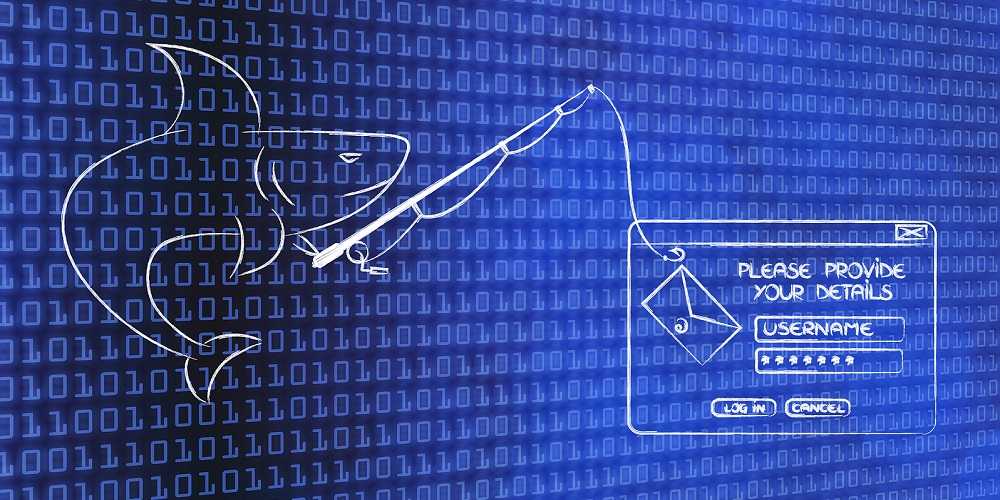
Fraudsters use phishing emails, text messages, or phone calls impersonating legitimate financial institutions to trick victims into revealing login credentials. Once accessed, criminals quickly transfer funds, change account settings, and lock out the rightful owner. Some scammers also employ malware or exploit weak passwords to gain unauthorized access.
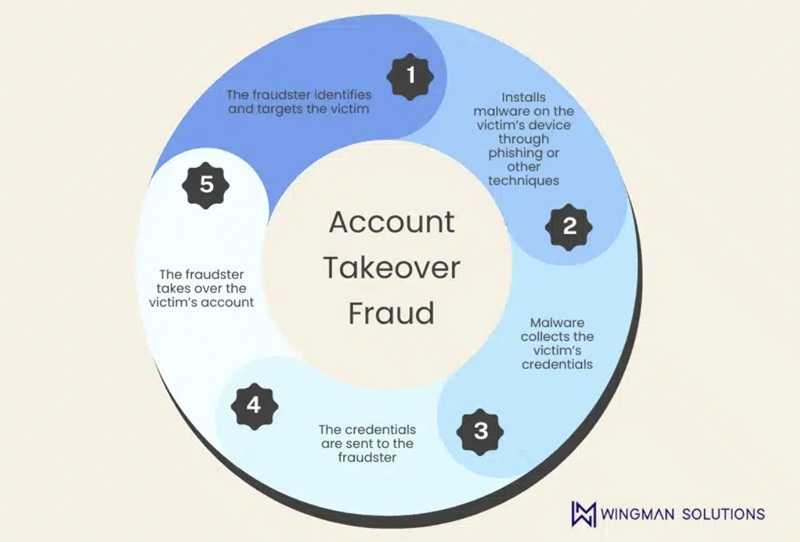
Who’s Being Targeted
While anyone with online accounts is vulnerable, criminals particularly target elderly individuals, small business owners, and those with substantial investment accounts. Victims often don’t realize their accounts have been compromised until significant funds have disappeared.
Protecting Yourself
The FBI recommends enabling multi-factor authentication on all accounts, using unique complex passwords, and never clicking links in unsolicited messages. Monitor accounts regularly for suspicious activity and contact financial institutions directly using verified phone numbers, not contact information provided in suspicious communications. Be skeptical of urgent requests for personal information, and immediately report suspected fraud to your bank and IC3.gov.
As is good practice when looking into any text or email, go directly to your account using a trusted link or call the institution using a phone number you find yourself. Never reply to the contact information in these messages.
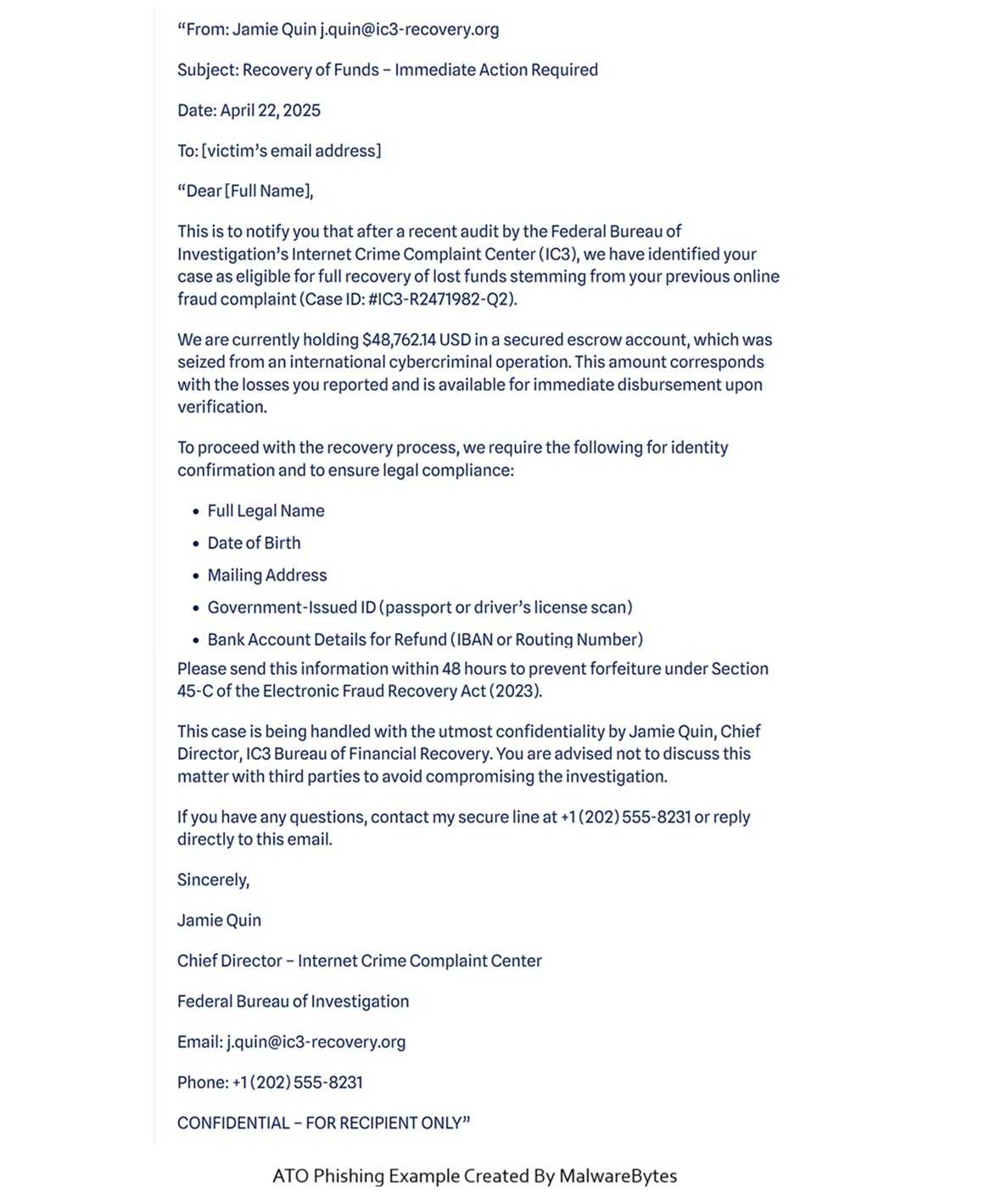
Below is an example of the phishing email going around created by Malwarebytes:

 SUBSCRIBE TO WEEKLY NEWSLETTER