Every 19 Seconds AI Supercharges the Phishing Game
By: Jim Stickley and Tina Davis April 21, 2026
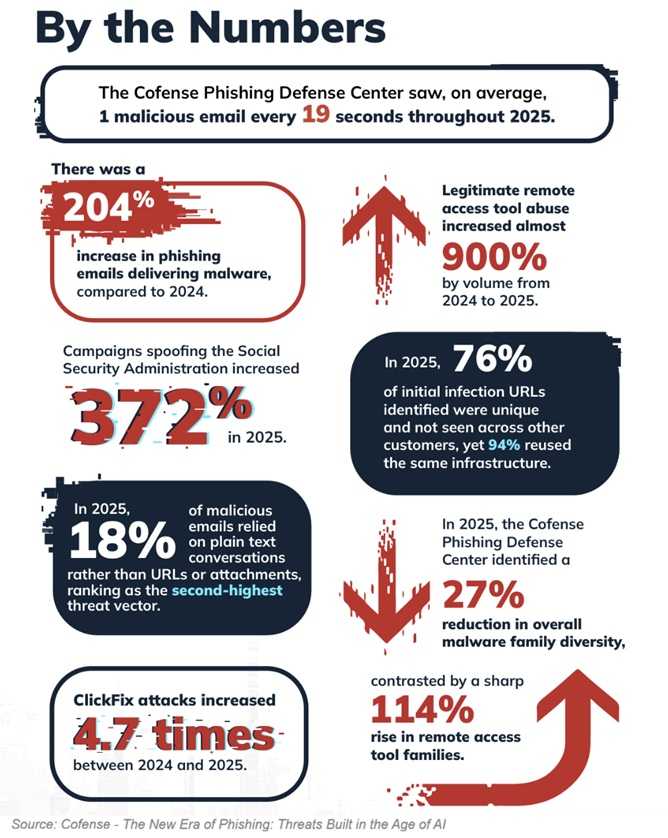
Phishing has always been a numbers game. Now artificial intelligence has turned it into a high-speed assembly line. In its report, “The New Era of Phishing: Threats Built in the Age of AI,” Cofense reveals that an AI-powered phishing attack hits inboxes every 19 seconds. That means possibly, in the time it takes you to read this paragraph, several more have already landed somewhere.
The report outlines five major trends shaping today’s threat landscape, with polymorphism leading the charge. What does this mean? Well, it means they’re keeping us on our toes. Polymorphic cyberattacks are typically malware or phishing attacks that constantly change their identifying characteristics (file names, encryption keys, signatures) making them difficult to detect by traditional means.
According to Cofense, 76% of initial infection URLs are unique to individual campaigns. Even more striking, 82% of malicious files carry unique hashes. In simple terms, attackers are constantly reshuffling the deck. Traditional pattern matching tools that rely on known signatures are increasingly outpaced.
Personalization has also reached unsettling new levels. Threat actors scrape publicly available data such as home addresses, company org charts, and social media posts to craft emails that look tailored and legitimate. These messages do not feel mass produced. They feel personal.
So how do you stay as safe as you can?
Slow down. Scrutinize unexpected emails, especially those urging urgent action. Verify requests through a separate communication channel. Be cautious about oversharing details on social media. Enable multi-factor authentication wherever possible. And keep security software updated.
And becoming more important in the age of AI, rethink what information you post on social media or even business networking websites. Increasingly, this information is collected and used to craft nearly undetectable phishing messages. Limit the specifics about your life, your family, and your job duties, and roles. Keep the information as generic as possible.
In the AI age, phishing is faster and smarter. Your best defense is staying skeptical and deliberate before you click.

 SUBSCRIBE TO WEEKLY NEWSLETTER