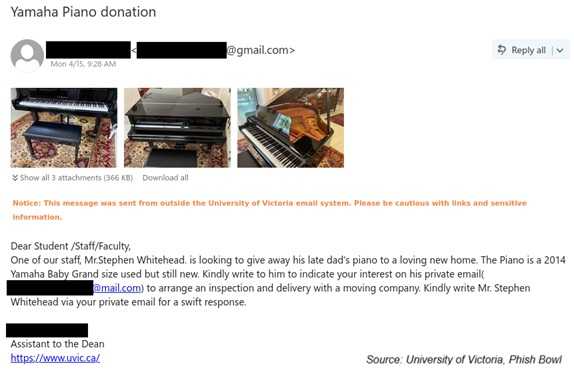
Just when you thought you’d heard it all, there’s always another song to be played. This one is big, very big. It’s called a “Piano Scam”, and countless victims around the globe are getting played. Even those doing everything right to avoid this scam don’t escape it. Here’s why.
This Piano Scam casts a wide net, targeting music schools and music stores, healthcare, and other industries. It also includes individuals searching online for a used piano. A scammer makes an offer that’s hard to refuse, a free piano and a story about why they can’t take it with them. The stories seem credible, often emotional, and include some sense of urgency. These tactics are all highly effective social engineering lures.
A mother looking for a used piano found one listed on Facebook, and it was for free! Someone was moving and didn’t want to take the piano with them. Acting quickly, she did everything a cybersmart user would check, including the freight company. Her search for a scam found nothing to be concerned about and believing it was a legit offer, she went for it. The scammer stole her payment information from her “downpayment” for the shipping cost. With that and her PII, the cyber-creep emptied her financial account.
“Brain Hack”
This elaborate scam is called a “brain hack.” It exploits a victim’s predictable thoughts and moves ahead of time, also called “mirroring authenticity.” It’s social engineering at its best, or worst for its victims. Every little thing a cybersmart user would check to make sure the offer is legit is covered. Scammers set up websites and more to dupe a victim. It’s a highly calculated brain hack not just limited to pianos. They use job offers, cars, products and more, anything to catch a victim.
The truth is, it could be any one of us caught up in a scam where even careful checking doesn’t expose it. Social engineering red flags and tips help avoid getting deceived. Experts say the first step is slowing down to think before we get caught in a web. Remembering the adage “If something sounds too good to be true it probably is” helps slow us down. As always, common sense is one of the best tools we have keeping us safe online, so don’t be afraid to use it.

 SUBSCRIBE TO WEEKLY NEWSLETTER







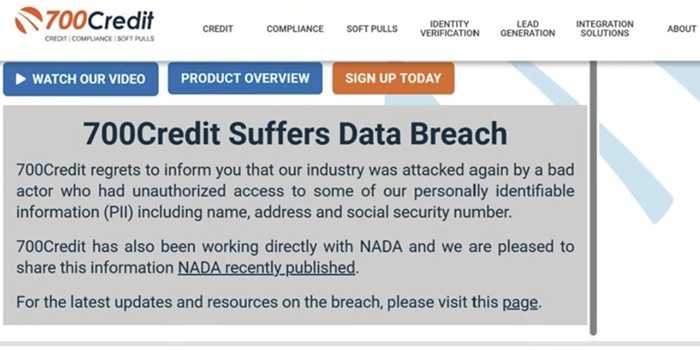
 Massive 700Credit Data Breach Leaves Information of Millions at Risk