WhatsApp Screen-Mirroring Scam Draining Bank Accounts
By: Jim Stickley and Tina Davis
December 9, 2025
There’s a new scam making the rounds on WhatsApp, and it’s costing people big. Criminals are using screen-mirroring tricks to get access to your most sensitive information—financial details, one-time passcodes (OTP), and even full control of your device.
Here’s how it works: The fraudster usually poses as an employee from your financial institution or tech support agent. They’ll contact you over WhatsApp and convince you there’s a “problem” with your account. To fix it, they pressure you into sharing your screen or downloading a remote-access app. The moment you comply, the scammer can see everything—your logins, one-time passwords, and PINs. In some cases, they even sneak in malware to record keystrokes, giving them continued access long after the call ends. Victims have reported money vanishing from their accounts and their identities being hijacked.
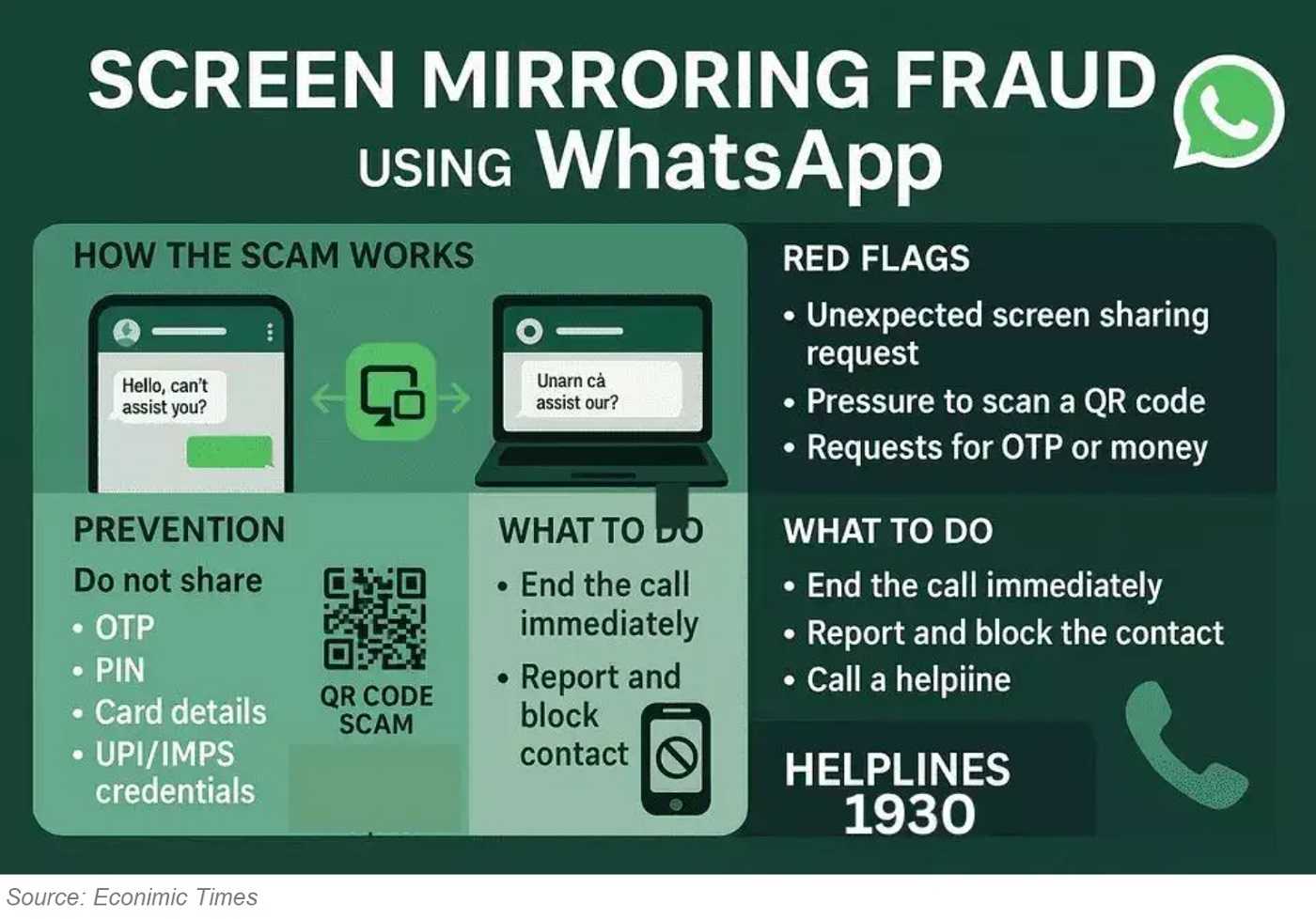
So how do you avoid becoming the next victim? Keep these tips in mind:
- Never share your screen with anyone you don’t know—especially over WhatsApp or any social media or chatting app.
- Financial institutions will never ask you to install apps or screen-share to resolve an issue. They also won’t ask you for login information.
- Hang up and call your financial institution directly using the official number if you get a suspicious request. Find this on the website that you have bookmarked or from a number you trust.
- Don’t enter OTPs or passwords while on a call with anyone claiming to “help.” This is especially true if you did not initiate the call for assistance.
- Stay updated by keeping your phone and apps patched and making sure you have antivirus software installed and kept up-to-date.
This scam relies on panic and trust. The best defense is slowing down, questioning requests, and remembering that if someone’s rushing you into screen-sharing, making you feel anxious, or just triggering your sixth sense, they’re likely rushing to steal your money.

 SUBSCRIBE TO WEEKLY NEWSLETTER