Amazon Text Scam Recalls Your Login Credentials
By: Jim Stickley and Tina Davis
March 10, 2026
A new phishing campaign is targeting Amazon customers. While we know that Amazon is one of the most spoofed brands when it comes to attacks, this one uses fake product-recall alerts designed to steal login credentials and personal information. While it still tries good old-fashion phishing lures, it also uses a bit of a different tactic for this one. Instead of making you feel like you need to act fast or your money will be gone, it offers to give you a refund.
Cybersecurity researchers say the messages, often sent by text, claim an item you recently purchased has been recalled for safety reasons and that you’re eligible for a refund. The catch—of course there is one—you must click a link to “confirm” the recall or claim the refund.
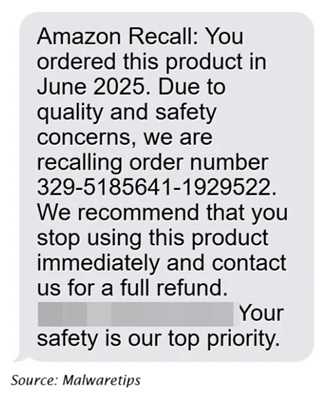 The link typically leads to a convincing but fraudulent Amazon sign-in page. Once victims enter their username and password, scammers can take control of their accounts and potentially access stored payment information. In some instances, it does go back to the sense of urgency in phishing cases, using urgent language. This one also includes fake order numbers to appear legitimate.
Consumer-protection experts warn that Amazon rarely communicates recalls through unsolicited text messages. Instead, legitimate recall notices appear in a customer’s account message center or through official company channels. Sometimes, they make the news.
How can you avoid giving up your credentials? Well, if you receive a recall message, do not click any links or respond. Instead, log in directly to your Amazon account using the official website or mobile app to verify whether a recall actually exists. It’s likely you’ll find it doesn’t.
As online shopping continues to grow, impersonation scams like this one are becoming more sophisticated. However, the typically anti-phishing strategies still apply. If it’s not expected, don’t click the link or attachment! Staying cautious with unexpected messages and verifying alerts through trusted sources remains the best defense against losing access to your accounts or financial information.

 SUBSCRIBE TO WEEKLY NEWSLETTER