Finding the perfect gift at a great price feels good. Discovering that the store was fake or your payment information was stolen certainly doesn’t.
Holiday shopping gives scammers plenty of ways to blend in. A fraudulent sale can appear between legitimate advertisements, and a fake delivery message can arrive just when you’re expecting several packages. Before the rush gets underway, a few practical habits can help protect your money and personal information.
2
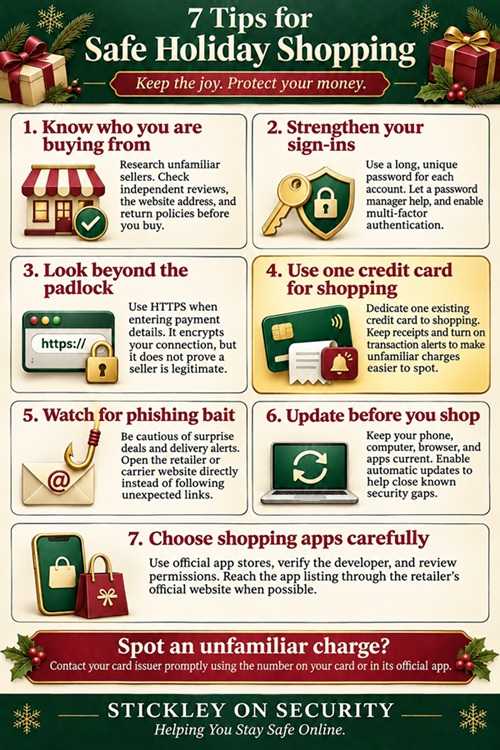
An attractive website doesn’t tell you who’s behind it. Before buying from an unfamiliar seller, search its name alongside words like “reviews,” “complaints,” or “scam.” Check several independent sources rather than relying only on testimonials posted by the store.
Read the shipping and return policies, look for usable contact information, and check the website address carefully. A familiar brand name with an extra word or misspelled letter could lead somewhere you didn’t intend to shop.
2
Reusing passwords makes life easier for criminals. If one account is compromised, they may try the same credentials elsewhere.
Give each shopping account a long, unique password. A password manager can create and remember them for you. Enable multi-factor authentication wherever it’s available, especially on your email and financial accounts, and never share a login code with someone who unexpectedly contacts you.
2
HTTPS helps encrypt information traveling between your browser and a website. That matters when entering payment details, but it doesn’t prove the business is legitimate. Scam websites can use HTTPS, too.
Check the seller and the website address before paying. Be especially cautious if a seller insists on payment by gift card, wire transfer, cryptocurrency, or a payment app.
2
Consider dedicating one existing credit card to your holiday purchases. Keeping those transactions together makes it easier to compare charges with receipts and spot something you don’t recognize.
Turn on transaction alerts and review activity throughout the season instead of waiting for the monthly statement. Keep order confirmations and receipts until purchases, returns, and refunds are settled.
This approach won’t prevent every fraudulent charge, but it can simplify monitoring. Report unfamiliar activity promptly using the number on your card or your issuer’s official app.
2
A surprise discount, failed delivery, or supposed payment problem can be bait designed to steal your information.
Instead of following an unexpected link, open the retailer’s or delivery company’s website or app directly. Check your orders there. Be suspicious of messages demanding an immediate payment or account verification to release a package.
2
Keep your phone, computer, browser, and shopping apps updated. Security updates help close weaknesses that criminals could exploit.
Enable automatic updates where possible, and install updates through your device settings or official app store. An unexpected advertisement telling you to download a “critical security update” deserves caution.
2
Download shopping apps through official app stores and verify the developer. When possible, follow the app-store link from the retailer’s official website.
Review requested permissions and question access that doesn’t fit the app’s purpose. Ratings and reviews can help, but they aren’t a guarantee of safety.
2
You don’t have to become a cybersecurity expert to shop more carefully. Take a moment to check the seller, protect your accounts, and watch your transactions. A little attention now can help keep an unwanted surprise off your holiday gift list.
For banks and credit unions
Share this article with your members
Copy a ready-made summary and link for your newsletter, website or social posts.