As Juneteenth celebrations take place across the country, cybercriminals are taking advantage of the holiday's growing visibility. Security experts are warning consumers to be cautious of phishing emails, text messages, and social media posts that use Juneteenth-related themes to steal personal information, passwords, or financial data.
Scammers often capitalize on holidays and major events because people are more likely to trust messages that appear connected to community celebrations, special promotions, or charitable causes. Juneteenth is no exception.
How These Scams Work
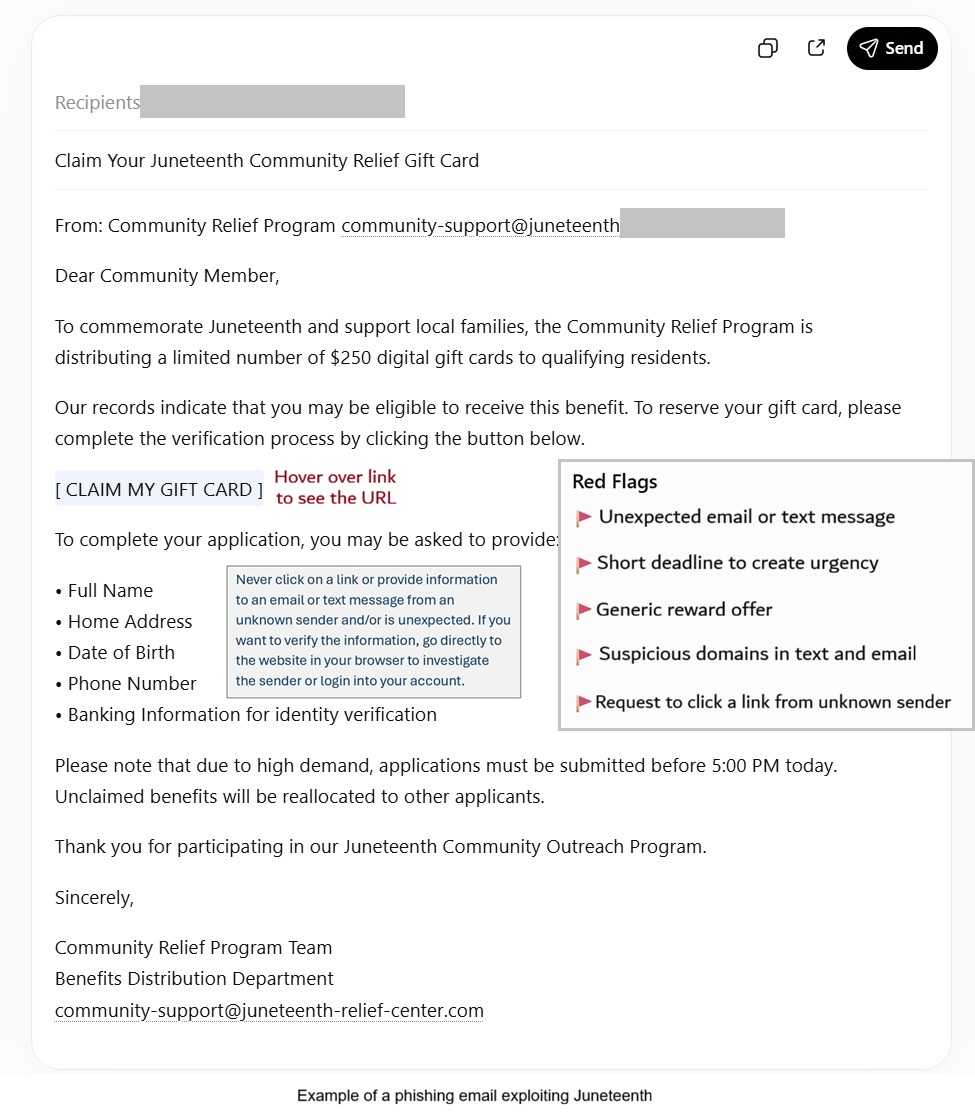
Fraudsters may send messages that appear to come from legitimate organizations, government agencies, community groups, or well-known brands. These messages often encourage recipients to click a link, open an attachment, or provide sensitive information.
Common scam tactics include:
- Impersonation: Emails or text messages that appear to come from trusted organizations requesting account verification or personal information.
- Fake Promotions: Offers of free gift cards, event tickets, merchandise, or exclusive Juneteenth discounts.
- Social Engineering: Messages designed to create excitement, urgency, or emotional connection to encourage quick action without careful review.
Why These Scams Are Effective
Many people are unfamiliar with official Juneteenth-related promotions, events, or community programs. Scammers exploit that uncertainty by creating messages that appear legitimate and time-sensitive. The combination of a trusted holiday and an attractive offer can make victims more likely to let their guard down.
How to Protect Yourself
Verify the Source - Before responding to any message, confirm that it came from a legitimate organization. Check email addresses, phone numbers, and website URLs carefully.
Avoid Clicking Suspicious Links - Hover over links before clicking to see where they actually lead. If something looks unusual, do not click.
Use Official Channels - If you receive a message about an event, promotion, or benefit, visit the organization's official website or contact them directly using verified contact information.
Enable Security Features - Use multi-factor authentication whenever possible and keep your devices, browsers, and software updated.
Report Suspicious Messages - If you receive a phishing email, text message, or social media message, report it to your email provider and the Federal Trade Commission at ReportFraud.ftc.gov.
Final Thought
Scammers are quick to exploit holidays, current events, and community celebrations to gain trust and steal information. Treat any unexpected request for personal information, passwords, or payment as suspicious—especially when it is tied to a limited-time offer or special event.
When in doubt, stop, verify, and contact the organization directly before taking action. A few extra seconds of caution can help prevent identity theft, financial loss, and account compromise.

 SUBSCRIBE TO WEEKLY NEWSLETTER