

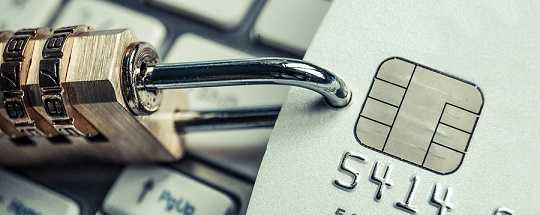
Online purchases are becoming an increasingly huge problem for American and other retailers around the world. A growing fraud of choice, known as “card-not-present” purchases, is replacing more traditional means of credit card crimes. Criminals presenting fake credit cards for in-person shopping is declining. However, the drop in “credit-card-present” abuse is currently offset by growing online fraud, forcing financial institutions (FIs) to search for solutions.
 A more effective technology than the magnetic strip card is the EMV (EuroPay/MasterCard/Visa) chip. As of October 1st of 2015, if a merchant in the United States accepts a credit card with no EMV chip, they’re stuck with the bill for fraudulent purchases. Which may sound like a benefit to the consumer, but ultimately those costs will get passed on to the consumer somehow.
Annual costs of payment card fraud is currently estimated to be around $10 billion. There are currently 1.24 billion cards and 15.4 billion POS terminals that accept the chip cards, but most of those are in other countries who are well under way with converting to this technology. It has been reported in Canada that after the conversion to EMV, card present fraud was cut by more than half, while card-not-present fraud doubled over a five year period afterward. The United States is lagging behind, but the looming deadline may put the conversion at the top of the priority list for financial institutions.
Because of the cost of the fraud and the shift, responsibility for preventing online fraud is falling onto the consumers’ laps more and more, whether they like it or not. However, it behooves both the financial institutions and the customers to work together to stop it.
Although most FIs have protection for unwitting victims, legitimate credit users have to be more aware of their credit card activity. Spotting criminal action on card-not-present transactions requires more vigilance than ever before. Immediately reporting suspicious activity to credit issuers is critical. Consumers need to monitor their credit card activity with ever-increasing voracity if card-not-present fraud hopes to be thwarted.
Using password-protected mobile wallets is another attempt at keeping online fraud transactions from reaching epic proportions. Financial institutions are always trying to stay a step ahead of clever cyber fakes such as implementing two-method authentication. Now, they are also adding features with layers of protection to these wallets, which has been successful in other countries. Now it will be up to consumers to install these and learn how to use them appropriately.
In addition, software and app developers are implementing features that allow the consumer to control how they use credit cards for online transactions. For one, they can activate an option turning it on and off when they want to for online purchases.
Keeping PINs and passwords private is not going away either, so remember to use strong passwords and phrases and don’t give out PINs or passwords to anyone. No matter how nicely he or she may ask and change them often.
Ferreting-out cyber crooks from legitimate credit card holders is proving a difficult challenge for all financial institutions. Establishing password protection and on/off switches for bona fide credit card users is gaining momentum in the US. EMV chip or not, no amount of technology replaces the alert and watchful eye of consumers. Stay informed, act immediately and utilize the latest options for your credit safety.
For banks and credit unions
Share this article with your members
Copy a ready-made summary and link for your newsletter, website or social posts.




