


Regardless of which side of the political line you reside, an email message promising to show you something damaging to a presidential candidate may be fascinating. Hackers know this and are using clickbait to get malware installed on all the machines possible. In this case, they are using a scathing message about Hillary Clinton’s fake activities as clickbait.
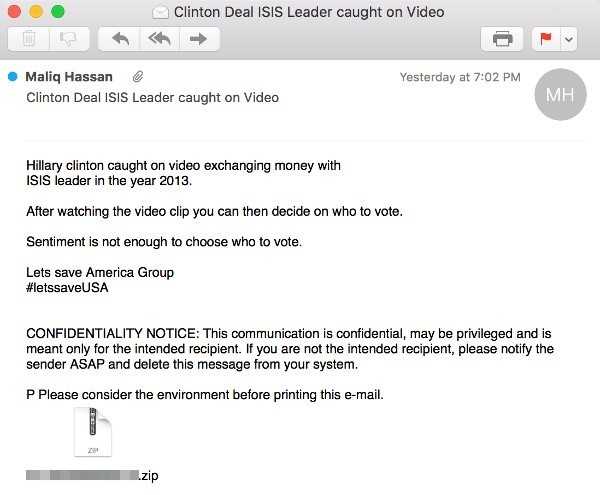
Clickbait is a type of headline that intends to shock a reader or viewer into opening the file. It may promise a photo of a naked celebrity, a strange looking sea creature, or in this case a video of Clinton supposedly meeting an ISIS leader. A link to a video arrives in email with the headline of “Clinton Deal ISIS Leader caught on Video.”
Consider using ad-blocking software to avoid getting baited by these ads. They don’t always use something so shocking as this to attract clicks, but hackers know that curiosity certainly kills the cat. Often malware even lurks behind regular-looking ads. That’s why ad blockers can be effective. However, the number one defense is just to avoid clicking any ads unless you know for certain they will not do any harm.
Inside this particular ad is a story about how the presidential nominee was supposedly seen exchanging money with the ISIS leader and a line stating “you can decide on who to vote.” What ultimately happens is a .zip file that when opened will unleash a Java file that installs the malware Backdoor.Adwind which can get access to information on the machine.
This particular malware affects Windows, Linux, Mac OS X, and devices running on Android. No one is immune in this case, so everyone needs to keep an eye out and avoid clicking on any type of clickbait.
For banks and credit unions
Share this article with your members
Copy a ready-made summary and link for your newsletter, website or social posts.




