


Once again Twitter and PayPal have teamed up to scam you. Ok, not really. They are, however, being used by hackers to scam you. The latest is called Angler phishing and the goal is to lure those trying to get support or customer service from PayPal using social media into giving up their private information to the scammers.
The scammers watch for legitimate inquiries for help on Twitter directed to PayPal. Then they send a reply to those asking, pretending to be PayPal support. However, the typical typos and bad grammar have been spotted in the replies, as well as impersonal greetings such as “Welcome, Customer.” They also may include imitations of the real logos. So be careful when replying to such tweets.
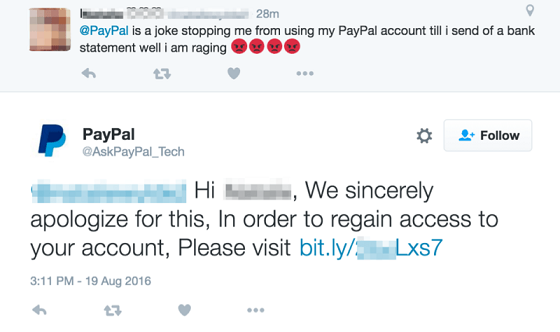
Avoid falling for these and other social media replies and instead, go directly to PayPal from their web page. Before you click any links in any tweeted messages, make sure they are really from the sender and not scammers. If in doubt, call or send a separate email message.
PayPal has set up a web page to help customers determine if emails or tweets or other social medial messages are real. Check their site to find it and if you think you have become a victim of this, let PayPal know by emailing them at spoof@paypal.com. They will work with Twitter to get fake handles shut down.
 The latest handles found that belong to the scammers are AskPayPal_Tech and AskPayPal; both have been suspended by Twitter. But don’t be surprised if more pop up. The legitimate PayPal help Twitter handle is just “PayPal.”
For banks and credit unions
Share this article with your members
Copy a ready-made summary and link for your newsletter, website or social posts.




