

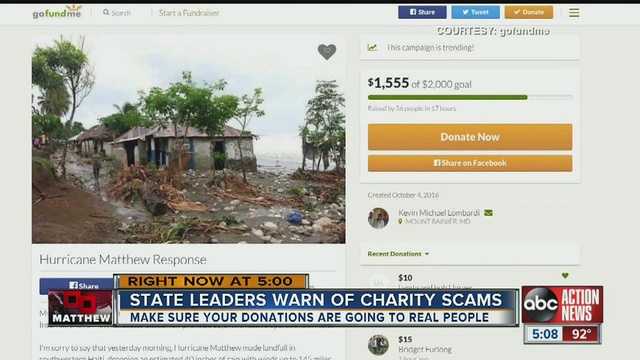
Natural disasters are awful. They bring out human empathy and the need to help in some way. Often, helping out means to donate money to charitable organizations that assist those in need after events such as hurricanes. Unfortunately, cyber criminals pounce on this and often send out phishing attacks in the aftermath hoping to lure people into giving money to their bogus causes. The United States Computer Emergency Readiness Team (US-CERT) has issued an alert warning users to “remain vigilant for malicious cyber activity seeking to capitalize on interest in Hurricane Matthew.”
 It’s always important to use caution when opening attachments and links in email messages that arrive unexpectedly. Even if it appears that the sender is familiar, that is not always the case. It is not difficult for cyber criminals to imitate someone from your address book or otherwise these days. Take a moment to confirm with the sender that it is indeed legitimate before taking action.
 Also make sure that anti-virus software is installed on every computer and device used to connect to the Internet. Keep these updated at all times with the latest security files. Also be sure to install all critical and security patches and updates as soon as they are made available to you. This doesn’t apply to computers only, but also to any mobile devices used. Mobile malware is on the rise. In fact, over the first half of this year, smartphone malware infections rose by 96% over the previous six months according to Nokia’s Threat Intelligence Report.
 Enable the anti-phishing feature of the browsers you use. This is a common feature in most of the well-known browsers.
It's not just email that scammers use to phish. Often big events are used to grab your attention on social media such as Facebook. It may show up as an advertisement or even on your feed as if it was sent or authorized by one of your "friends." Don't trust these blindly. Again, do some research to make sure before clicking on them or giving money to any charity advertised in such ways.
 If you want to donate money to such causes, take some time to follow a few simple guidelines before giving money to any of them:
- If you get an unsolicited phone call or email message, it’s best to find out the name of the organization and do independent research before giving money. Don’t provide any information to someone who calls you out of the blue.
- Don’t wire money or provides funds in the form of a pre-paid card or gift card. Scammers often ask for this and it should always raise red flags.
- Call the organization and ask if the solicitor is authorized to ask for donations on its behalf.
- Do some research on the charity before giving money. Look on websites that provide information on various charities and complaints about them so that you don't give up cash to scammers.
If you have been or suspect you may have been the victim of a charity scam, contact the FTC and report it. Information can be found on the FTC Complaint Assistant page of the FTC’s website.
For banks and credit unions
Share this article with your members
Copy a ready-made summary and link for your newsletter, website or social posts.




