Last year, Barbie spied on your children and this year it is a different doll called My Friend Cayla. Interestingly, this toy uses the same company for the voice technology, Nuance. Nuance is also the company that does the voice recognition software for law enforcement agencies, but also for the Samsung smart televisions that were the subject of some controversy in February of 2015 for using voice activation to record information and send it off to Nuance, without the TV owner’s knowledge.
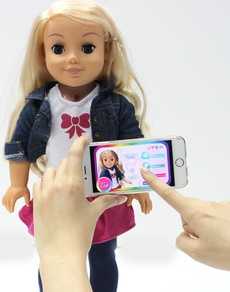 As was the case with Hello, Barbie, My Friend Cayla also communicates with children, records the data and sends it off to a company called Genesis. Cayla has the ability to answer almost any question (according to her website) when connected to the Internet and will respond to thousands of questions your child may ask when offline. She is designed to connect to a smartphone so she can play games too, which is no doubt, a very cool feature.
Where Barbie was accused of having confidential “conversations” with children and feeding the information back to servers on the Internet, the controversy surrounding Cayla seems to be more from a privacy rights perspective. In other words, the claim is that parents are not given adequate information about where the information recorded with Cayla goes and what is done with it.
 However, any time a toy connects in any way to the Internet (and there are a lot that do these days), there are some considerations:
- As technology advances many toys are connecting back to the Internet and sending information somewhere. Once any information leaves your, or your child’s possession, it’s difficult to know what may be done with it. Hackers were able to steal account information of 12 million vTech customers, including 6.4 million minors in 2015, for example. When shopping for technical toys, take time to research how they function before giving them to kids. Make sure you understand what information is being recorded, where they are sending information, and what is done with it once it’s on another company’s servers.
 If you buy internet-connected toys like My Friend Cayla, Hello, Barbie or any other similar products, make sure to register them. Don’t forget that game consoles, even the toddler versions are Internet-connected and vulnerable. The companies will inform you when patches and updates are available for their products. If you are not sure how to do this, contact the manufacturer’s support line and find out what you need to do.
 Before allowing your child to play with these toys, connect and update them. As with home networking equipment such as routers and wireless access points, electronic toys may have been sitting on the stores shelves for some time and will need to have the latest software updates applied.
 Immediately change any default passwords that come with toys. Refrain from using the child’s name or any information that may be easily guessed, don’t use any dictionary words, and don’t share it with the child. Make sure they are at least eight characters (or the maximum allowed if less than eight), have a combination of upper and lower case letters, and include a number and a special character.
 Use unique online credentials for every account, especially when it comes to toys. Often, hackers will try using stolen credentials over multiple websites and they are quite successful these days. Password reuse continues to be a favorite scapegoat for data breaches.
To the company's credit, there is an option to filter out words you don't want the child to hear or images you don't want them to see (she can share pictures too). However, as fun as this toy and those like it may seem, they do require some research and consideration before letting kids play with them. Think about whether or not you want your family’s conversations sent to another organization, regardless of how harmless they may be or where the servers of that company reside. If the answer is the negative, consider more traditional “off the grid” toys for your kids.
For banks and credit unions
Share this article with your members
Copy a ready-made summary and link for your newsletter, website or social posts.