
Each semester, Professor Ronald Klimberg holds a contest for students in his Advanced Analytics class to challenge their analytic skills. The competition, called the Analytics Cup at St. Joseph’s University in Philadephia, involves projects proposed by various companies that need a solution. The four projects that were assigned for the December 2016 semester were presented by Flying Fish Brewery, the Philadelphia Union, the St. Joseph’s University Alumni office, and Privacy Ref. The topics were somehow related to those organizations and involved scheduling beer production, determining soccer prices, predicting bequests, and predicting the cost of a data breach. It’s not really a challenge to determine which company’s presented which topics.
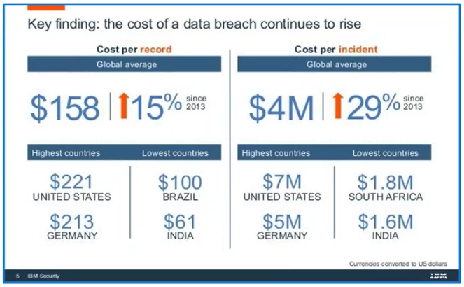 While each one may be interesting for different reasons, the winning project involved trying to figure out how to predict what a data breach at an organization will cost. It’s been said numerous times by security professionals that if your company has not been breached, it is really only a matter of time. Some would like to know how the answer before it happens. However, while there is data from past breaches that can help provide ballpark figures, there isn’t anything that can come up with numbers specific to an organization, regardless of size, industry, or anything else. So, Privacy Ref worked with the students in Klimberg’s class to create an easy-to-use model to do this.
The only real requirements for the project was that it had to be easy to use, easy to distribute, and the results had to be easy to understand. According to Privacy Ref’s Bob Siegel, the students accomplished this.
The students put together surveys that asked participants about costs related to a data breach, either dependent on (such as costs to notify those affected) and independent costs (such as public relations costs). They ran 1,000 trials using triangular distribution.
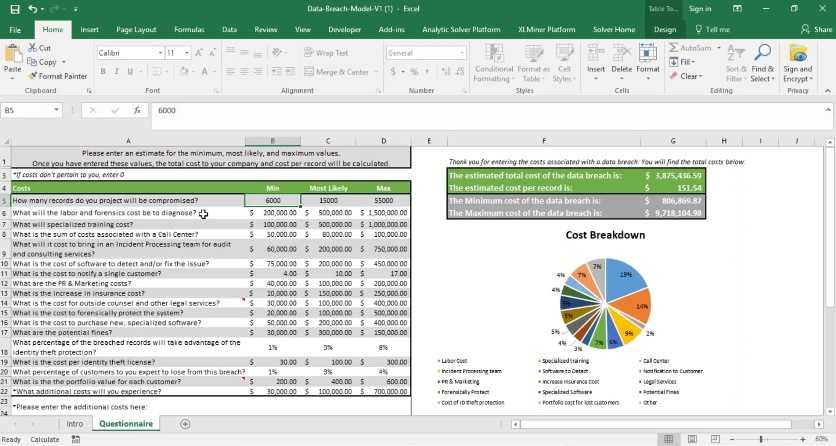
To meet the “easy” requirement, both teams chose to use Excel for their models, which resulted in something that most companies have readily available and that C-Level executives are accustomed to using. The only differences between the two were how the information was gathered on the surveys and how it the data was presented. All of the teams presented great solutions, but one of the teams working on the cost of a data breach tool was awarded the top prize.
To see the video of the students’ presentation and get the tool, you can visit Privacy Ref’s website. The tool is named “Predictive Data Breach Cost Model.”
For banks and credit unions
Share this article with your members
Copy a ready-made summary and link for your newsletter, website or social posts.