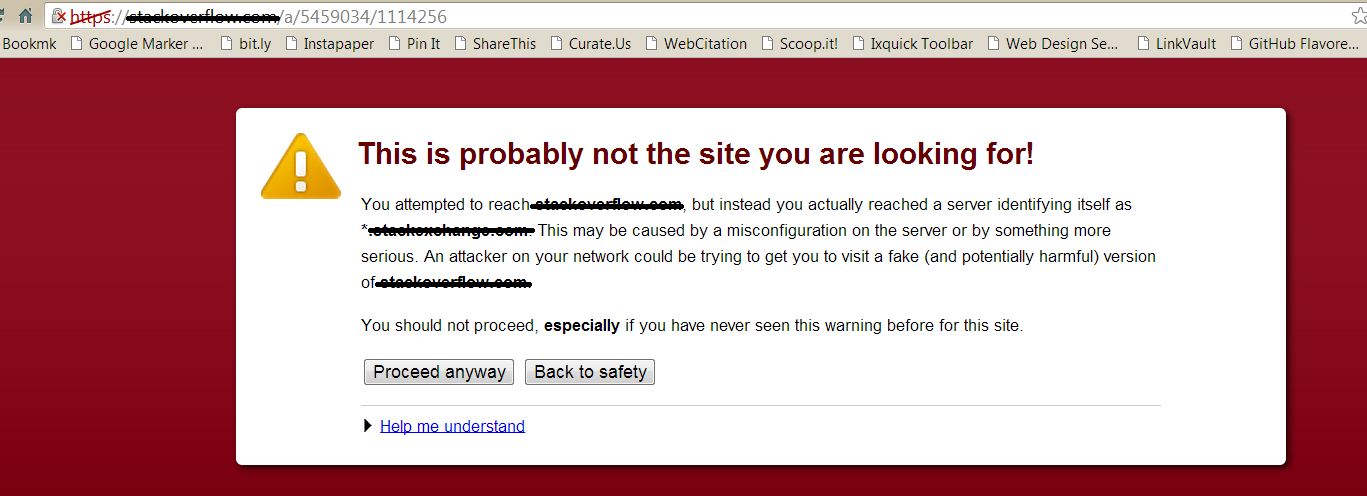
Are you overwhelmed with warnings when you are browsing the Web? If so, you are definitely not alone. UC Berkeley researchers, with funding from Google, found that many of us are so inundated with browser warnings that we just ignore them completely. This is not a good situation. Popup fatigue or warning fatigue can be a real problem because ignoring these boxes can lead to unwanted products being installed on your machine, malware being let loose, or even a complete takeover of your computer.
In a 2014 study, researchers found that of the 25 million authentic security-related warnings displayed, users ignored a whopping 70.2% of them in Google Chrome. The conclusion was that users are so annoyed by all the warnings and popups that they are experiencing “warning fatigue.” Although the data is a bit older, it still holds true.
 These dialogues and security warnings are intended to protect users from phishing and malware attempts. However, there are several issues. There are too many, they are too technical or nebulous for the average user to understand, people are in too much of a hurry to pay attention, or any number of others. Because of all of these, they become ineffective.
There was no specific data provided in the report about how many users become victims of phishing or malware after clicking through the warnings. However, other research has indicated that phishing attacks, financial losses as a result of them, and those who become victims of phishing attacks is on the rise.
Avoid becoming a victim by paying attention to the warnings. If in doubt, don’t continue the session. Since most phishing scams begin with an email, don’t click links in suspicious email messages or from unknown senders. Even if you know the sender, if any inclusions in the message are not expected, just ignore it or confirm it was intended first.
 The best advice is to ensure all browsers are updated with the latest versions and patches, consider ad-blocking software, and take a moment to read the warnings before clicking them away.
This month, Google released several of them along with a new version of Chrome. It also announced an upcoming product intended to block ads the company deems undesired to users. Hopefully, that will help with this issue too, whether or not it is intended.
For banks and credit unions
Share this article with your members
Copy a ready-made summary and link for your newsletter, website or social posts.