
Security for The Internet of Things (IoT) is a ginormous concern since it continues to thrive in our cyber society, showing no sign of slowing down. From smart homes to smartphones and other connected devices, it looks like hackers may be the only ones getting smarter. Security spending for 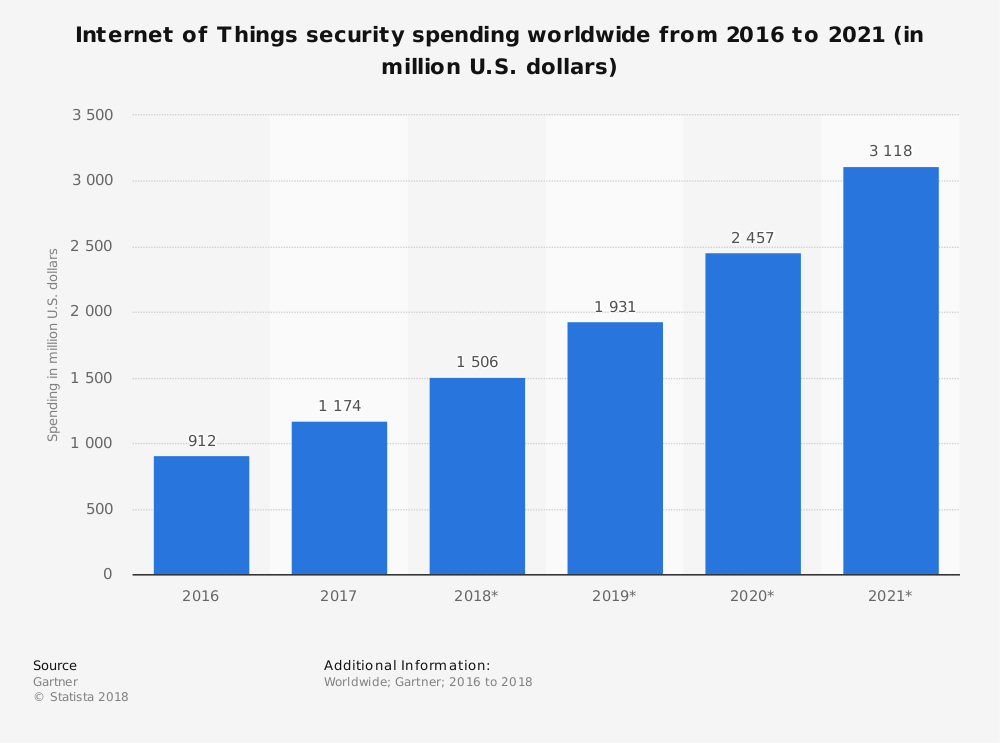 the IoT has increased dramatically since 2016 ($9.1 million) and is forecast to reach $3.1B in 2021. There’s no sign security spending will ever level off unless the IoT finally outsmarts hackers, a reality found only in a perfect world.
IoT is a network of physical devices that can include objects in vehicles such as the “OnStar” system, home appliances (even a slow cooker), toys, security systems, and other items that are able to connect to each other or something else and exchange data. In short, anything that can connect to the Internet is in one way or another connected to the collective IoT – and very much linked to our everyday lives via our homes or workplaces.
One analyst firm believes over 26 billion devices will be connected to the IoT by 2020. Still others say that number will hit over 100 billion by the same time. That’s a lot of smart devices out there, with many lacking the security to fend off a dedicated hacker. In the IoT, it only takes one unsecured connected device to bring down an entire network, and that system can belong to an individual or a corporation. Either way, there’s a ton of connectivity out there ripe for the picking and hackers are thrilled to go along for the ride.
 Investing in cyber security for the IoT, including a program for educating users should be included in any cybersecurity program for any organization. It may seem like an overwhelming prospect, but it certainly doesn't have to be. You can certainly create and perform the training internally, which may not be a reasonable option. However, there are also many companies out there that can provide a comprehensive program that doesn't break the bank. Whatever you choose, the program should most certainly include continual education. This is because threats change all the time. It’s hard to keep up if the training only happens once a year or even less frequently.
Experts agree that the current IoT technology is fragmented, lacking consistency between device manufacturers, with each IoT product or service having its own security weaknesses. That means there’s no way to combine forces to address and fix security concerns – at least not for now. Although most agree a united front would be very effective answer to hacking, nothing is actually moving toward that direction. In the meantime, the IoT warns all customers to immediately update security patches, use cyber smart common sense, and oh – cross your fingers!
For banks and credit unions
Share this article with your members
Copy a ready-made summary and link for your newsletter, website or social posts.