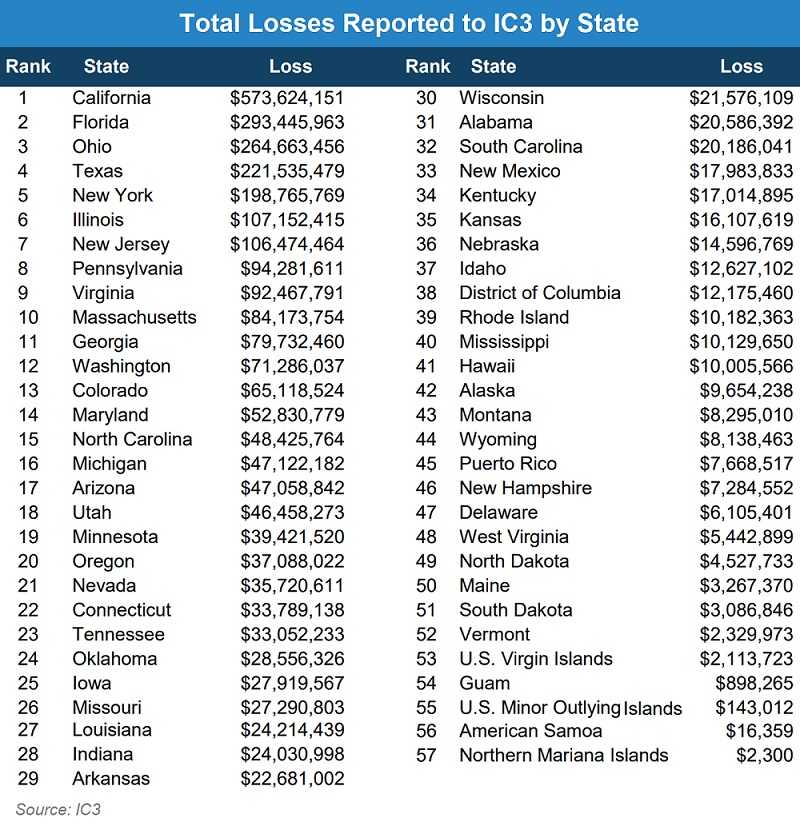
The FBI is the lead federal agency for investigating malicious cyber activity by criminals, nation-state actors, and terrorists. In 2013, the agency’s Internet Crime Complaint Center (IC3) began releasing statistics for cybercrime in the U.S. The IC3 department was created in 2000 so the public could report on cybercrimes of all types. With individual citizens and businesses alike reporting these crimes, the FBI develops resources to enhance operations and collaboration in this country and abroad. Since their first IC3 report was released, the FBI has the unenviable task of ranking U.S. states by the number of cybercrimes reported by their citizens, as well as the financial damages these attacks incur.
Last year was no reason to party for some states. So, buckle-up and see if the state where you live makes the 2019 Top States for Cybercrime.
?In a list where the top winners are also the biggest losers, the FBI’s IC3 data provides an avalanche of invaluable cybercrime data. For instance, the number one cybercrime in the U.S. by victim count at 114,702 is a combination of phishing (email), vishing (voice), smishing (text), and pharming (fake websites). The number one cybercrime in the U.S. by money lost is BEC (Business Email Compromise) and individual EAC (Email Account Compromise) at over $1.7 billion.
To report a cybercrime, visit the IC3 website and fill out the online form. Include as much information as possible, including dates and times the crime occurred and any financial figures you have. The website includes a list of information to provide:
- Victim's name, address, telephone, and email address
- Financial transaction information (e.g., account information, transaction date, and amount, who received the money)
- Subject's name, address, telephone, email, website, and IP address
- Specific details on how you were victimized
- Email header(s), if possible
- Any other relevant information you believe is necessary to support your complaint
No matter what state you’re in, cybercrime continues to grow while U.S. agencies continue to fight the threat. The IC3 reports U.S. citizens should be aware of all cybercrime types. Categories of online criminal activity include: charities and credit card fraud, government impersonations (IRS and others), healthcare, investments, lottery/sweepstakes, ransomware, and data breaches.
For banks and credit unions
Share this article with your members
Copy a ready-made summary and link for your newsletter, website or social posts.