Deep Instinct Report Sounds the Alarm on Financial Institution Driven AI Fraud
By: Jim Stickley and Tina Davis
August 25, 2025
Folks in the financial services industry should listen up, as should anyone who uses online banking services. The latest Deep Instinct Voice of SecOps report reveals AI-driven attacks are no longer the work of science fiction—they’re real, they’re happening, and they’re hitting your industry hard.
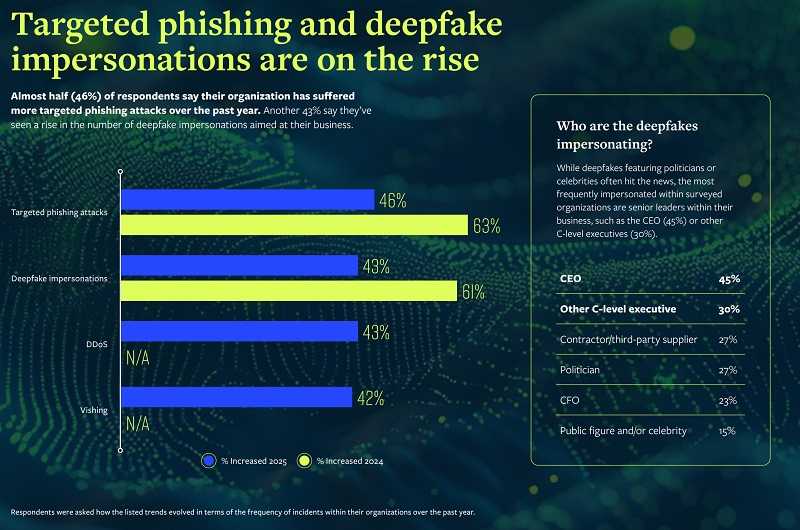
Nearly 45% of financial institutions say they’ve been targeted by AI-powered cyberattacks in the past year. That’s almost half of financial institutions and insurers scrambling to stay safe. On top of that, deepfake incidents—where attackers impersonate executives via fake audio or video—have spiked by 55%.
What does that mean to all of us? Well, these high-tech tricks can damage trust, lead to financial loss, and leave customers—us— feeling violated. Imagine a scammer posing as your financial institution’s CEO on video, demanding urgent transfers—chilling, right? Well, it has happened. Remember the AI video meeting where the CEO asked for wire transfer and no one realized that CEO was an AI impersonator?
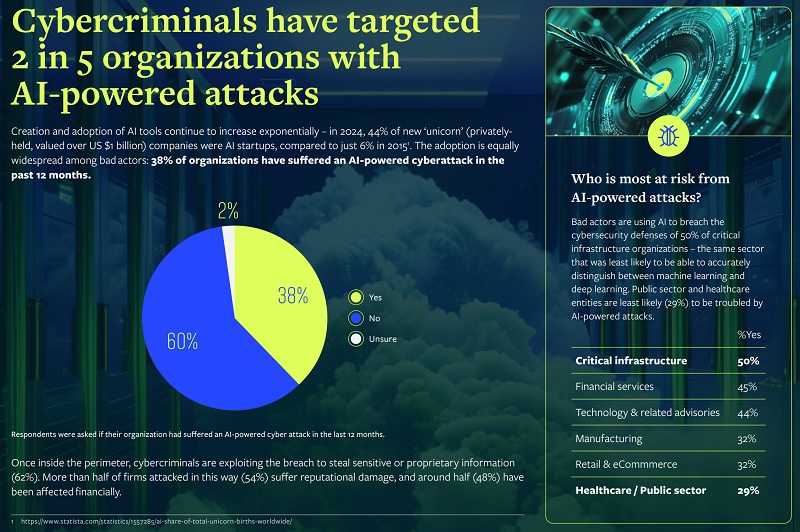
Here’s how finance customers could feel the AI pain:
- Sophisticated phishing: Personalized, AI-enhanced scams are far more convincing. Because of this, employees may be more likely to cut corners rather than confirm if they’re true before taking action.
- Impersonation fraud: Deepfake audio/video may trick employees or clients into handing over money, particularly via wire transfers.
- Data breaches: AI may help attackers crack those defenses faster, increasing the risk of stolen data.
Worried? Here’s your playbook:
- Pause before you click—especially on urgent-sounding emails or links.
- Pause before you trust voices or videos—slow down and verify with a known contact. Also consider having a “code word” or phrase so you know for certain the person on the other end is indeed who you expect it to be.
- Use multi-factor authentication (MFA) everywhere to raise the bar for attackers. While having a code sent to your mobile phone or an email is not necessarily the best way to do this, it is better than nothing. Consider other methods like biometrics, code generators, or hardware keys.
- Update your accounts and apps regularly—AI attacks learn fast; outdated systems don’t stand a chance. When you see that update notification, get on it.
- Stay informed—financial institutions should educate customers about AI threats and remind them how real they are and how they can hit anyone.
Bottom line: AI isn’t just someone’s creative idea of scams—it’s our new reality. Be sharper, question everything, and don’t let the bad AI turn you into a statistic.

 SUBSCRIBE TO WEEKLY NEWSLETTER