Home Title Theft May Make Your Home No Longer Your Home
By: Jim Stickley and Tina Davis July 17, 2026
Imagine waking up to learn your home is no longer your home. No one broke in and held you hostage to get it, no one served you paperwork to get out, but suddenly you discover that the name on the deed to your property is no longer yours and no actual legal transfer took place. No broken windows. No moving trucks in the driveway. However, paperwork appears that says it’s no longer yours.
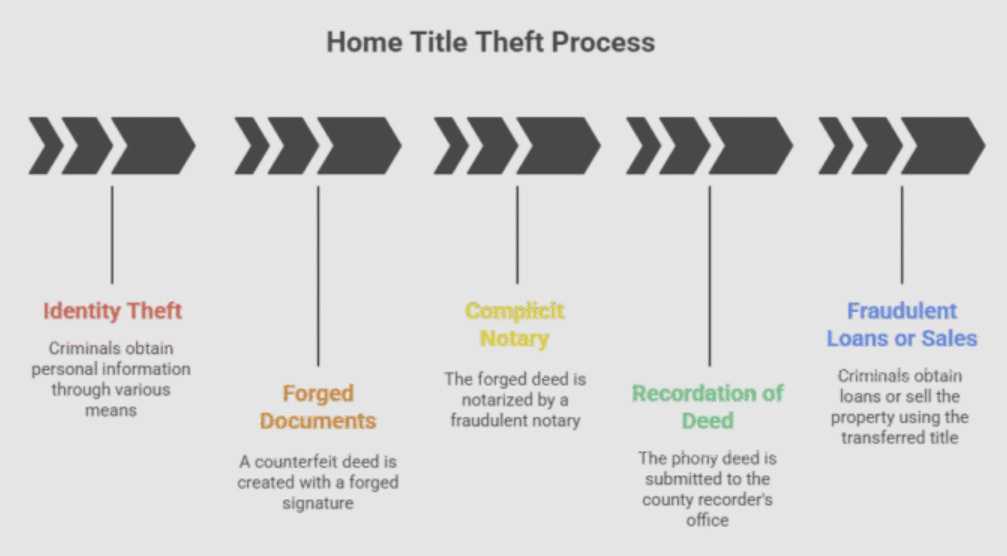
Deed fraud, often called home title theft, is a growing crime where scammers forge documents to transfer property ownership into their name or an accomplice’s. Once recorded with the local county office, the fraudulent deed can look legitimate enough to fool lenders and buyers.
From there, criminals may attempt to sell the property, rent it out, or take out home equity loans against it. In some cases, homeowners only discover the fraud when they stop receiving mortgage statements, get foreclosure notices, or are contacted about loans they never applied for.
How can this happen, you ask: Well, the targets are often vacant properties, rental homes, or houses owned free and clear without a mortgage. Older homeowners can also be prime targets. In other words, properties that aren’t always on the front of the owner’s mind.
Of course you want to know how to avoid this. With all kinds of scams appearing on websites like Zillow and craigslist, it’s very important to check in on your assets once in a while.
Protecting yourself starts with monitoring. Regularly check your property records with your county recorder’s office. Sign up for title or property fraud alerts if your jurisdiction offers them. Be cautious about sharing personal information publicly, and review your credit report for unfamiliar activity. As of this writing, you can get a free copy of your credit report from each of the three credit agencies every week now. No need to look that often, but do check at least quarterly. If you are expecting to apply for credit, consider putting a freeze on your credit. You have to do this with each bureau, individually. It’s a free service and you can unfreeze it temporarily, should you need to.
Your home is likely your largest investment. So, make sure no one quietly walks off with it on paper.

 SUBSCRIBE TO WEEKLY NEWSLETTER