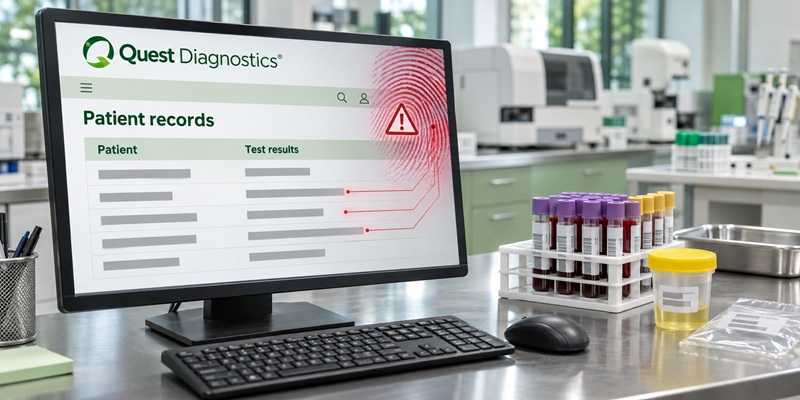
Millions of Americans rely on Quest Diagnostics for medical testing, but a recent cybersecurity incident has raised concerns about the privacy of patient information. The medical testing giant disclosed that an unauthorized party accessed its systems, potentially exposing sensitive patient records. The investigation is underway, and there are still plenty of unanswered questions about whose information was accessed and exactly what was taken.
2
Quest Diagnostics discovered the unauthorized access on October 21, 2026. The incident involved its Quanum Lab Services Manager system, which healthcare providers use to order laboratory tests and view patient results.
Quest immediately restricted access to the affected system and brought in outside cybersecurity experts to investigate. The company also notified federal law enforcement.
2
Quest confirmed that patient health information and personally identifiable information were involved. However, the company has not yet identified the specific health-related information accessed or the number of patients affected.
Quest also temporarily paused access to two other systems as a precaution, but reported that no data was accessed in those systems. The company says its core operations have continued, and the affected systems have since been restored.
2
For now, Quest is working to identify affected individuals and healthcare providers. If you receive a breach notification, read it carefully and follow the recommended steps. If it offers some type of credit monitoring, take advantage of it…just because it’s always a good idea to do so when it’s offered and you don’t already have it active.
Never click unexpected links or provide personal information in response to an unsolicited message. Contact Quest or your healthcare provider using verified contact information if you have concerns.
Meanwhile, keep an eye out for unexpected medical bills, unfamiliar insurance claims, or suspicious messages claiming to come from Quest. Criminals sometimes exploit data breaches to launch convincing phishing attacks and it doesn’t always happen soon after a breach. They often keep the information for months or years before striking.
Your medical information is valuable to criminals. Until Quest reveals more about this incident, staying alert and watching for signs of identity theft are sensible steps to protect yourself.
For banks and credit unions
Share this article with your members
Copy a ready-made summary and link for your newsletter, website or social posts.