There is yet another phishing scam targeting PayPal users. This one is an example of how the fraudsters and scammers are getting pretty good at tricking their victims. It even uses the actual PayPal logo (or an incredibly well-done facsimile of it), the PayPal color schemes, and claims there is an issue with the user’s account that needs to be corrected. Until it is, there will be limited access and functionality to the account.
The email received is not bad, but still does have the tell-tell signs of phishing, if you are paying close attention. There are few language mistakes (for example, one heading is “What the Problem’s”) and there is a generic greeting of “Dear Customer.” It also has a sender address that is nothing similar to PayPal’s domain (in the example seen, it was “notice-access-273.com”).
However, if the reader is tricked into thinking there is a problem, the button included in the email that supposedly goes to the PayPal login screen, actually goes to a fake site. Now, the phoniness of that site is very difficult to detect. It has the PayPal logo nicely done. At the bottom are the logos for a 100% secure site by Symantec, but the wording is not quite right: “Secured & Certificate by Symantec.” If you are looking for the green lock next to the URL to ensure you have landed on a secure site, you will see it. Per ESET, the thieves are transmitting the form over an HTTPS link.
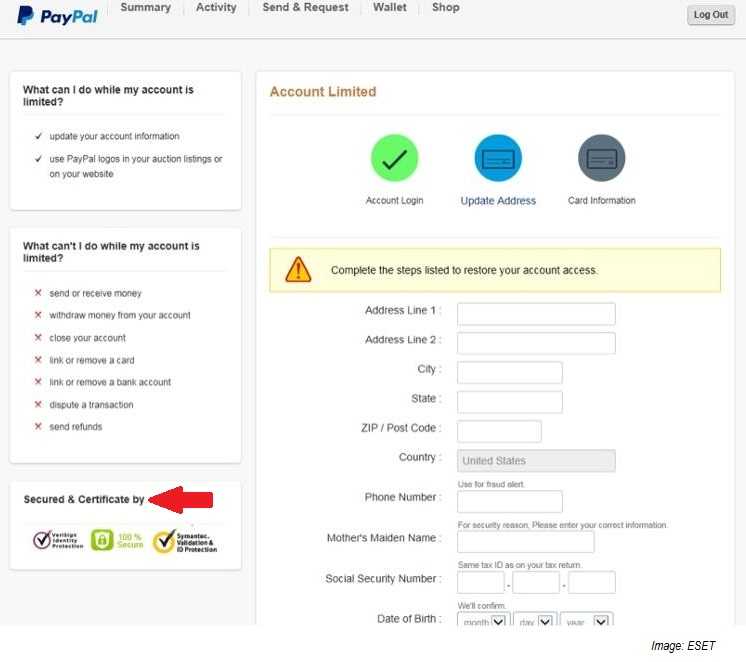
Along the side of the screen are some FAQs about having limited access. A subsequent screen after clicking the “continue” button has a list of items to fill in. These include address, social security number, and mother’s maiden name.
 Always be on the lookout for phishing. With the plethora of data breaches occurring these days and the sophistication of the fraudsters on the rise, it’s ever more important to pay close attention when an email is received that says something is wrong with an account that stores such sensitive information. Never click links or attachments included in those. Go directly to your account and login from a previously saved link or by manually typing the URL into the address bar. If you receive a suspicious email or find a fake PayPay-related site, you can report it to PayPal as well. There is more information in its Help Center.
PayPal is a particularly attractive target for such scams because it’s tied to payment card and bank account numbers. If they get your login credentials, it’s not much more effort for them to steal from you. Always take the time to read messages carefully and if there is any suspicion at all, don’t click.
For banks and credit unions
Share this article with your members
Copy a ready-made summary and link for your newsletter, website or social posts.