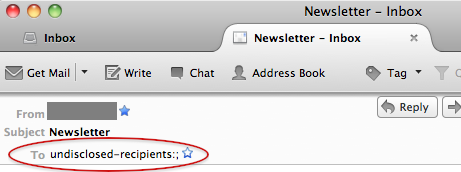
I don’t know about anyone else, but if I receive an email addressed to “undisclosed recipient,” I am immediately suspicious. That’s with good reason, however. If the person sending the note doesn’t know my name, then it’s probably not a very important message and in the case of 13 victims and their stolen $204,650 in cash, they’d have been better off just immediately trashing messages addressed to them in that manner.
A case in New Zealand found that the victims had received phishing emails mimicking that of a major bank. Unfortunately, a major financial institution actually did send email addressed to “undisclosed recipients,” so the victims didn’t think much about it. When they opened the email, a link was included that requested they enter their passwords to their accounts which then directed them to a link that they thought was their actual financial institutions. Unfortunately, the thieves used their passwords to steal from them.
 Phishing emails are rampant these days and long since gone are the days that you can easily and quickly identify them as fraudulent. The cyber thieves are getting wiser and craftier and are making the messages and the websites they use for scams to look so much like the real ones that even the professionals can’t easily determine their authenticity. That means we have to be “smarter than the average bear” (to borrow a phrase from Yogi Bear) to avoid being scammed.
The number one rule to keep in mind is that if an email is sent with an unexpected link or attachment, it should always be eyed with a fair amount of suspicion. This applies even when the sender is familiar. It is very easy to “spoof” the name on the “sent from” line. Spoofing occurs when the sender slightly changes the header of the message to make it appear as if it’s sent from someone or somewhere other than where it actually has originated. Even if it looks like your mom sent it, it is still possible she didn’t. Take a few extra minutes to examine it and if there is any doubt, trash it. Another way to check it is to pick up the phone and call Mom. She’d probably love to hear from you anyway and even if she's "chatty Cathy" that day, it’s worth the time.
 Also remember that just because this particular case happened in a galaxy far away, it’s likely the same or similar scam is happening within our own galaxy too. So don’t just dismiss these as insignificant.
Once the money was stolen, it was sent to “mule” accounts, which are intermediary accounts from the money is typically withdrawn before the banks figures out the scam. In this case, money was withdrawn from ATMs and casinos and sent oversees per instructions from a coordinator there. It was usually sent via Western Union or Money Gram and to people in Malaysia, Nigeria, and the United States.
The police did charge four men for money laundering and obtaining by means of deception. Some of the money was recovered, but the banks refunded most of the stolen cash themselves. This is why it’s also important to report any suspicious charges to your financial institution immediately. The sooner it is discovered, the less costly for everyone.
For banks and credit unions
Share this article with your members
Copy a ready-made summary and link for your newsletter, website or social posts.