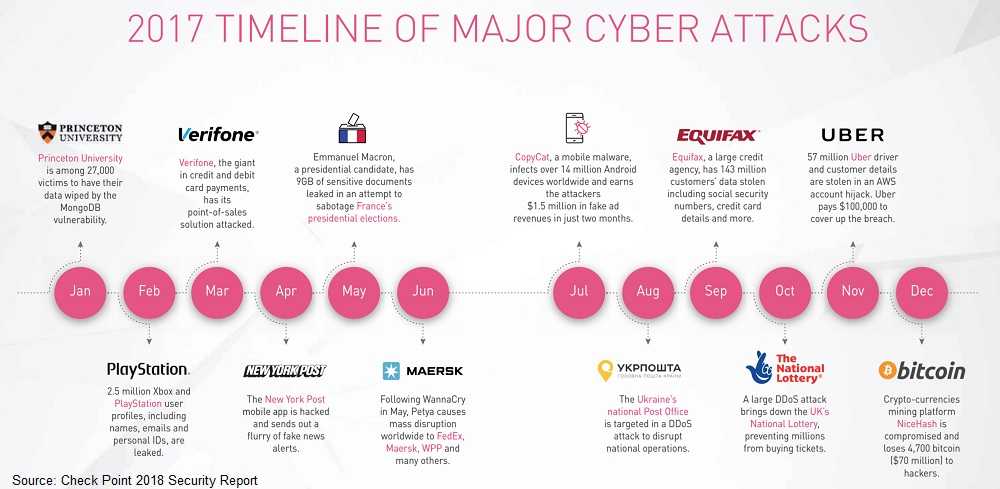
It’s about the time a year ago that an infamous ransomware virus took the world by storm. WannaCry crippled businesses, took down hospitals, and created quite a stir all over the world at roughly that time. It cost billions of dollars in damage and quite possibly can be credited with changing people’s attitudes about ransomware, other malware, and cybersecurity in general…which is a good thing. However, it and others like it are not going away just because we’re now thinking more about them. While companies are at least talking about new strategies, a survey by Check Point discovered that a measly 3% of organizations in the U.S. are really prepared for another attack such as WannaCry.
According to Check Point researchers, this ransomware outbreak marked a turning point. We are now aware of new generation of cyberattacks. Avast found 176 million attempted WannaCry attacks within the past year.
But what exactly are the threats we should all be looking for moving forward? Honestly, the list hasn't changed. The intensity likely will.
 Malware Creeping Into Physical Devices
WannaCry took down transportation systems and logistics organizations. Sure. That’s annoying. But it also hit Britain’s National Health Service. It took down physical devices in hospitals and clinics and likely caused mortal harm to some.
2
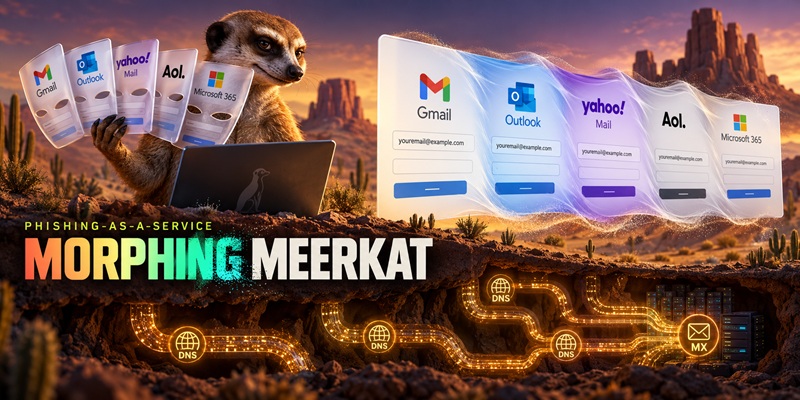
WannaCry showed how interconnected the world is these days. It demonstrated how successful a large-scale attack can really be. It made its way around the globe in record time hitting organizations in over 150 countries. With speed like this, spreading ransomware can be a lucrative business for criminal organizations. All it took was for one person to click on a malicious link or attachment to set it loose. Phishing is still the top way these threats will continue on their way and they’re only going to get worse when they do begin.
2
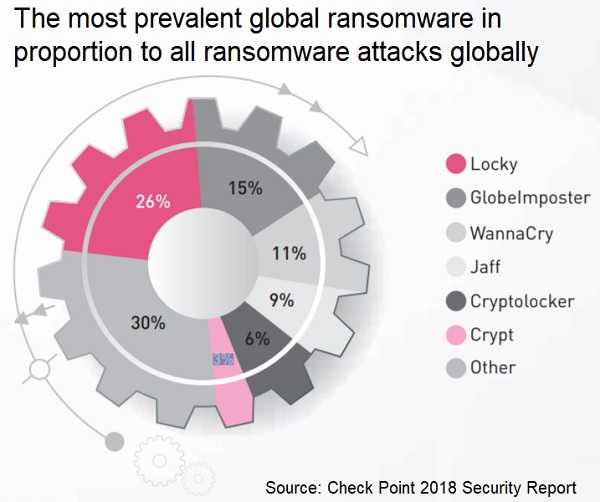 Hacking tools that are developed by nation states are now making their way to the front of the stage. Stolen hacking tools developed by the NSA were responsible WannaCry’s run, as were they for Eternal Blue and NotPetya.
EternalBlue has been seen repeatedly spreading banking Trojans and other ransomware types into this year. SamSam, which took down the city of Atlanta and caused grief for the Colorado Springs DOT (twice), was also the result of an exploit out of the NSA. While having people on the side of the U.S. with the ability to create these exploits may be “flattering,” it can cause real harm when they are leaked or stolen.
2
As a result of these news-making events, there has been an increase in cybersecurity awareness. It put ransomware and other threats in the minds of others besides IT professionals. Hospital administrators are now aware of what ransomware can do. More companies are taking a look at their cybersecurity strategies and adjusting them accordingly. This is truly a positive. But these threats are still lingering about and not disappearing any time soon. Rapid7 research found that WannaCry virus was still the 6th most widespread threat in Q1 of this year.
2
 Patch all systems. It really works. As soon as one is released for any machine on your network, take some time to get it applied. This is especially important if it’s marked as critical or a security patch.
- Backup critical data on a regular basis. What “regular” means for you depends on the type of organization. A financial institution may require this one or two times per day. A hospital, however, may need to do this hourly. It’s up to each organization to determine what is needed for it.
- Perform continual awareness training on cybersecurity threats and how to react to them. Regardless of how many perimeter tools are in place, it only takes one phishing email to make it to an employee’s inbox to sink the ship. Threats evolve and change; sometimes quickly. Once a year is no longer adequate.
And no matter how large or small your organization may be, it’s still possible to get hit with a ransomware attack. Cybercriminals do not discriminate based on size.
For banks and credit unions
Share this article with your members
Copy a ready-made summary and link for your newsletter, website or social posts.